




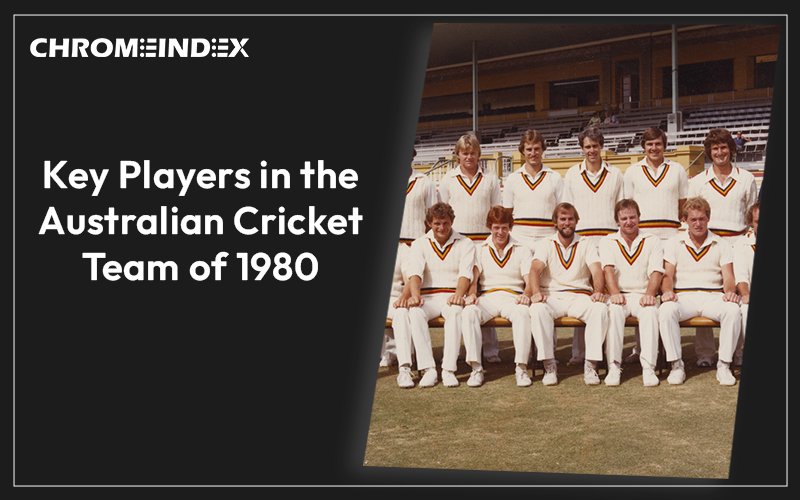

The key players in the Australian cricket team of 1980 were at a critical juncture in its history. After a period of domination in the 1970s, Australia’s cricketing fortunes were in the midst of transition. Several iconic players from the previous era were coming to the twilight of their careers. New faces were emerging, ready to lead the team into the next phase of international cricket. It was a time of rebuilding and reshaping. But the foundations laid by key players in 1980 would define the Australian cricketing legacy in the years that followed.
The 1980 Australian team, under the leadership of Allan Border. Combined a strong core of experienced players with a promising new generation. It was a year marked by solid performances, particularly in the game’s longer format. With the West Indies and Pakistan being the primary opposition. This blog highlights key players behind Australia’s cricket success that year and their standout performances.
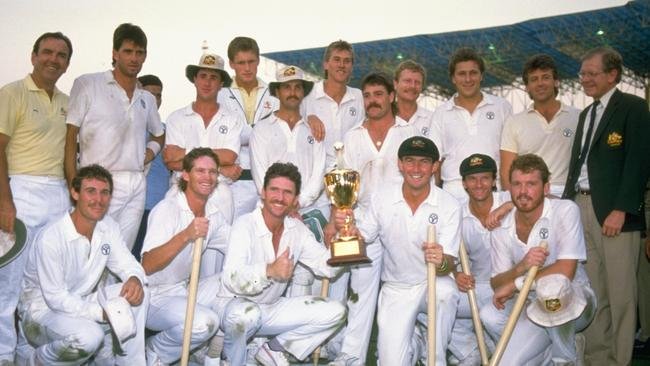
1. Allan Border – The Heartbeat of Australian Cricket
Allan Border’s importance to Australian cricket cannot be overstated. As the captain, he steered the team through turbulent times and was the glue that held it all together. Known for his resilience and grit, Border was the unyielding backbone of the Australian team.
Performance in 1980: In 1980, Allan Border’s performances were a reflection of his leadership qualities. He scored 122 in the second Test against West Indies in Sydney, anchoring Australia’s innings during a partnership slump. Borde’s unbeaten 100 against West Indies in the 4th SCG Test showcased his resilience.
His 1980 performance cemented Border’s reputation as a top middle-order batsman, especially on tough tours. Under his captaincy, Australia began the slow but steady process of rebuilding its cricketing prowess.
2. Dennis Lillee – The Fearsome Fast Bowler
Dennis Lillee, already a legend by 1980, was a crucial figure in Australia’s bowling attack. Known for his fiery pace and competitive spirit. Lillee was the type of bowler who could turn a match with a single burst. By 1980, he was beginning to wind down his career, but he still could rattle opposition batsmen.
Performance in 1980: In 1980, Lillee took 28 wickets in 8 Test matches, a testament to his still-potent skill and aggressive pace. His best bowling performance came against the West Indies at Melbourne, where he took 6 wickets for 52 runs in the second innings. His ability to extract bounce and movement from the pitch, particularly on Australian soil, kept batsmen on edge.
Lillee’s leadership with the ball was instrumental in Australia’s success. Even though his career was winding down, he was still a dominant force in world cricket, providing crucial breakthroughs at critical junctures.
3. Greg Chappell – The Elegant Batsman
Greg Chappell was not only one of Australia’s finest batsmen but also one of the most stylish. Known for his graceful technique and ability to play both the fast and spin bowlers with ease, Chappell was a key figure in Australia’s batting lineup in 1980. His leadership skills, however, had not yet fully come to the forefront.
Performance in 1980: In 1980, Chappell scored 691 runs in 10 Test matches, with an average of 38.38. One of his most significant innings came during the 1st Test of the series against Pakistan, where he scored a composed 118 in Adelaide, leading Australia to a commanding total. His performances, though not as flashy as some of his contemporaries, were always reliable.
Chappell’s contributions to the middle order were invaluable, and his technique provided a benchmark for future Australian batsmen.
4. Rod Marsh – The Wicketkeeper Extraordinaire
Rod Marsh was the stalwart wicketkeeper for Australia throughout the 1970s and 1980s. With his quick reflexes and sharp glovework, Marsh was instrumental in Australia’s success with the ball. His ability to keep wicket-to-fast bowlers of the highest caliber was a key part of the team’s strategy.
Performance in 1980: Rod Marsh’s performance behind the stumps was as important as his contributions with the bat. In 1980, Marsh was involved in over 30 dismissals, showcasing his agility and sharp reflexes. Though primarily known for his wicketkeeping, Marsh also contributed to the team’s batting with a few vital innings. His 54 runs against the West Indies in Sydney was a crucial knock, coming at a time when the lower order was exposed.
Marsh’s leadership behind the stumps provided both tactical insight and the calming influence required when facing fierce pace attacks.
5. Jeff Thomson – The Pace Terror
Jeff Thomson was known for his raw pace and aggressive approach to fast bowling. By 1980, Thomson was not the same bowler who had terrorized batsmen in the 1970s, but he remained one of the most dangerous bowlers in world cricket. His combination with Dennis Lillee had given Australia one of the most lethal fast-bowling attacks in history.
Performance in 1980: Thomson’s performance in 1980 was an example of his ability to extract pace and bounce even when conditions were not always favorable. He finished the year with 22 wickets from 8 Tests. His best performance came against Pakistan in the first Test in Sydney, where he took 5 wickets for 43 runs in the second innings, helping Australia bowl Pakistan out and win the match.
Though not as quick as he had been in the 1970s, Thomson still could cause havoc with his pace and bounce, making him a key figure in Australia’s attack. Key Players in the Australian Cricket Team of 1980
6. Kim Hughes – The Promising Captain
Kim Hughes represented the future of Australian cricket in 1980. A dynamic and attacking batsman, Hughes was one of the most promising players of his generation. His leadership abilities were still developing, but his raw talent and energy were undeniable.
Performance in 1980: In 1980, Hughes made his mark with the bat, scoring 520 runs in 8 Test matches. One of his most notable performances came against Pakistan in the 3rd Test, where he scored an aggressive 80 runs off 132 balls, providing Australia with a much-needed innings at a crucial juncture. His positive style of play was a refreshing change and showed that he could take on the mantle of leadership in the years to come.
Though Hughes was still finding his feet as a leader, his performances with the bat and his never-say-die attitude proved that he had the potential to be a future captain for Australia.
In Short: Key Players in the Australian Cricket Team of 1980
The key players in the Australian cricket team of 1980 were a mix of veterans and emerging stars, and the contributions of players like Allan Border, Dennis Lillee, and Greg Chappell were vital in setting the stage for the team’s future dominance. Border’s leadership, Lillee’s fearsome pace, Chappell’s elegance, and the energy brought by players like Kim Hughes and Jeff Thomson all played a key role in the shaping of modern Australian cricket.
As Australia looked to the future, these key players were instrumental in building the foundation for the great teams that would dominate world cricket in the years to come. Their performances in 1980 not only ensured Australia’s competitive standing but also demonstrated the resilience and talent that Australian cricket would be known for in the decades to follow.